Tuscan Wines
Chianti Classico Riserva: when is it worth spending more?
Chianti Classico Riserva: what changes compared to the Annata, the best vintages to look for and when it makes sense to spend more on a bottle.
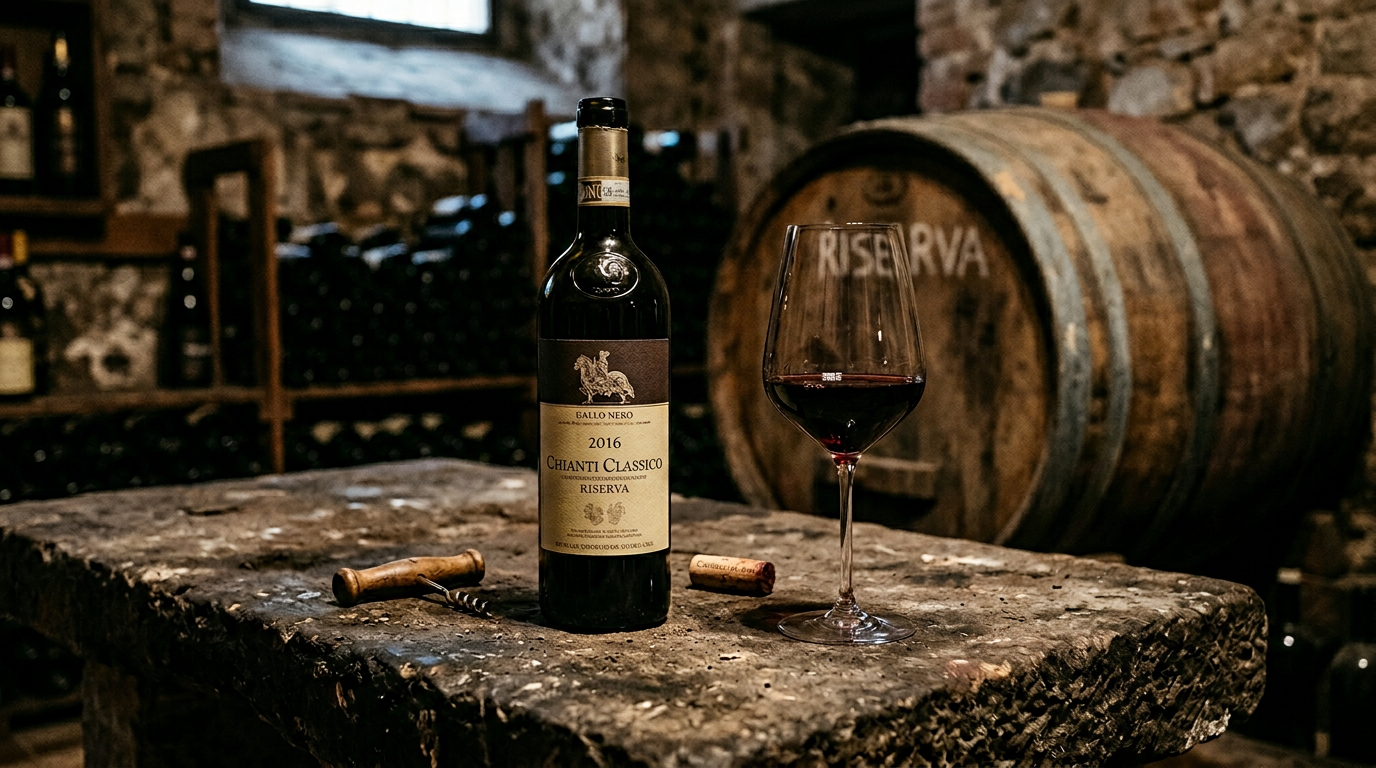
Riserva: what it actually means according to the production rules
The word “Riserva” on Italian wine has a precise meaning - it is not a marketing term. For Chianti Classico DOCG, the production rules establish that a bottle can only be called Riserva if it respects these minimum requirements: ageing of at least 24 months in total, of which at least 3 months in bottle, and release to the market no earlier than 1 October of the second year following the harvest.
In practice this means that a Chianti Classico Riserva from an October 2022 harvest cannot be sold before October 2024. Two years of life in the winery, during which the wine passes through wood (barriques, tonneaux or large barrels, depending on the producer), followed by bottle ageing.
But the production rules only define the minimum - many producers go well beyond. Some Riservas from the great Chianti Classico producers age in wood for three years and in bottle for one year, reaching the market with four years behind them. This prolonged ageing produces wines with a complexity and structure that the Annata cannot achieve.
The differences in the glass: Annata vs Riserva
The difference between a Chianti Classico Annata and a Riserva from the same producer and the same vintage is perceptible and significant.
The colour: the Riserva tends to have a more garnet and less violet colour than the Annata - controlled oxidation during wood ageing moves the colour towards brick tones. It is not necessarily a sign of age - it is part of the maturation process.
The aroma: the Annata has more primary aromas - fresh red fruits, flowers, herbal notes. The Riserva adds complexity: spices (cinnamon, pepper, cloves), tertiary notes of leather, tobacco, damp earth, dried mushrooms. Wood aromas (vanilla, toast) may be present if the ageing was in barriques, but in the best producers they integrate without overpowering the Sangiovese.
The taste: the Riserva has silkier tannins - ageing has smoothed them, integrated them with the body of the wine. Acidity remains high (it is the Sangiovese) but is perceived as less aggressive because it is balanced by the broader structure. The aromatic persistence is notably longer.
Drinkability: the Annata is drinkable young, almost immediately. The Riserva needs time - opened without adequate aeration, it can seem closed and woody. With decanting or a few extra years of bottle age, it opens fully.
The best vintages of the last ten years
Not all Chianti Classico vintages produce high-level Riservas - climatic conditions profoundly influence quality.
2015: a historic vintage, perhaps the best of the last twenty years. Hot and dry summer, healthy harvest, wines with exceptional concentration and structure. The 2015 Riservas are still developing optimally.
2016: another great year, with more elegant and less powerful wines than 2015. High acidity, fine tannins, very long longevity.
2019: warm year with great concentration. Rich, fruity wines with present tannins. Still young but already very expressive.
2021: relatively cool vintage, with more elegant and less flamboyant wines. Good acidity, precise fruit, interesting longevity.
The less generous vintages (2017 was very hot with oxidation risks, 2014 was rainy) generally produce less convincing Riservas - but the best producers manage to make good wine even in difficult years.
How much a good Riserva costs and why
The price range of Chianti Classico Riserva is very broad - from 18-20 euros (lesser-known but good-quality producers) to over 100 euros for the most famous labels from the great producers.
Why the price differential from the Annata? There are concrete reasons: winery ageing costs (wood, space, labour), the delay in releasing to the market (the capital invested in production remains tied up for two years instead of one), and the selection of the best grapes (many producers use the Riserva only in exceptional vintages and with vineyard-specific grapes).
The best value range is found between 25 and 50 euros - mid-level producers with good terroir and correct winery practices. Above 50 euros you enter the territory of great names and collectible bottles, where you also pay for the reputation of the brand.
When to open it: the right ageing times
A Chianti Classico Riserva bought from a wine shop just after it is released is not necessarily at its best. Optimal consumption times vary based on the vintage and the producer, but some general guidelines:
The simpler Riservas (average producers, non-exceptional vintages): drinkable between the 3rd and 6th year from the harvest.
Good-quality Riservas (well-known producers, good vintages): at their best between the 5th and 10th year from the harvest.
The great Riservas (excellent producers, historic vintages such as 2015 and 2016): can wait up to 15-20 years, constantly improving.
If opening a young Riserva, decanting is fundamental: at least one hour in a decanter, allowing oxygen to open the aromas and soften the still-closed tannins.
Riserva and Tuscan cuisine: the noble pairings
Chianti Classico Riserva is a wine for important dishes - not matched with a bruschetta or simple tomato pasta (not because it would not work, but because the wine would have far more to say than the dish).
Dry-aged bistecca fiorentina: the pairing par excellence. The complexity of the Riserva meets the depth of aged meat.
Pappardelle with wild boar ragù: the wild intensity of cinghiale calls for a structured wine. The Riserva has the tannins to stand up to the ragù and the complexity to engage with its flavours.
Chianina roast: a longer aromatic persistence than the Annata, excellent with roasted meats that develop caramelisation notes.
Aged Tuscan Pecorino: a territorial pairing that works beautifully - the richness of the cheese and the tannic structure of the Riserva complement each other perfectly.
Want to taste it for real?
At Ristorante Alcide you will find it on the table - made the right way, with fresh ingredients and the care of the Ancillotti family since 1849.