Cacciucco
Where to eat fish in inland Tuscany: the guide
Eating fresh fish in Tuscany does not mean being on the coast. The best inland fish restaurants and why they work.
Fresh fish in the Tuscan interior: a paradox that works
The idea of eating fresh fish forty or fifty kilometres from the sea seems counterintuitive - or at least so it seems to those who do not know Tuscany. But anyone who has been to this region knows that inland restaurants serving Tyrrhenian fish with the same naturalness as bistecca fiorentina are not an anomaly at all. They are part of a deep-rooted tradition.
The paradox resolves when you understand the logistics: the Tuscan Tyrrhenian ports (Livorno, Viareggio, Marina di Grosseto) have fish markets that operate in the early hours of the morning. The fish landed during the preceding night is auctioned at 3-5 in the morning. Refrigerated vans leave at dawn and reach the interior in less than two hours. A restaurant in Poggibonsi, Siena or Arezzo can have very fresh fish in the kitchen before 8 o’clock.
Geographical proximity to the coast is an advantage, but it is not the only variable. A restaurant directly on the port but with mediocre supply quality serves worse fish than an inland restaurant that has built direct relationships with fishermen over the years. The cold chain and the quality of the supplier relationship matter more than the position on the map.
How fresh fish arrives from the Tyrrhenian
The supply chain of fresh Tuscan fish from sea to inland table has precise steps.
Fishing: Tuscan boats fish in the Tyrrhenian and the Tuscan Archipelago using different methods - bottom trawling in sandy seabeds for prawns and sole, longline fishing for bottom fish (scorpionfish, conger eel), net fishing for anchovies and sea bass. Many fishermen return to port early in the morning after one or two nights at sea.
The fish market: Livorno and Viareggio have wholesale fish markets where the fish is sold at auction - regular buyers (wholesalers, restaurateurs, fishmongers) make their bids in the early hours of the morning. Those with direct relationships with fishermen can buy before the auction or by private agreement.
Transport: refrigerated vans (at 0-4°C) carry the fish towards the interior. Timing is fundamental - fish leaving Livorno at 6 can be in Poggibonsi by 7:30.
The kitchen: fresh fish must be prepared on the day of arrival. Restaurants that work with daily fresh fish build the day’s menu based on what arrives - they do not have a fixed menu but a list of possible dishes that updates every morning.
What to look for in a good inland fish restaurant
How to recognise an inland restaurant that really works with fresh fish?
The menu varies: a restaurant with a fixed menu all year round, with the same items in summer and winter, does not work with seasonal fish. The menu of a restaurant that buys fresh every day changes with the market - there are fixed dishes and dishes of the day that depend on the catch.
The staff knows what’s in: asking where the fish comes from or what arrived fresh that day must receive a precise answer, not a vague one. “Where does this sea bass come from?” - “From the Tyrrhenian, arrived this morning from Livorno” is the answer of a restaurant that knows its supply chain.
The smell in the dining room: a fish restaurant should smell of good sea - of fish broth, garlic in oil, fresh parsley. It must not smell of old fish or frying in exhausted oil.
The price: fresh Tyrrhenian fish costs money. A seafood first course with fresh clams cannot cost less than 14-16 euros in a restaurant that buys fresh. If the price is unusually low, it is fair to wonder about the quality of the fish.
The inland Tuscan zones with the best fish tradition
Not all of the Tuscan interior has the same tradition of fresh fish.
Val d’Elsa (Poggibonsi, Certaldo, Colle Val d’Elsa): the zone with the most consolidated tradition of inland fish. The proximity to Livorno (40-50 km) and the historic relationships with Tyrrhenian ports have created a sea cooking tradition that has lasted at least two centuries.
Valdarno: the Arno valley between Florence and Arezzo has some tratttorie with a good tradition of river fish (carp, trout, lake eels) but less fresh sea fish.
Sienese-Grossetano: the zone around Siena and Grosseto is close to the Maremma coast - fresh fish but with less variety than the northern Tyrrhenian.
Arezzo and province: furthest from the sea - the fish tradition is less rooted and the logistics more complicated.
Ristorante Alcide in Poggibonsi: Tyrrhenian fish in the Val d’Elsa
Ristorante Alcide is the inland Tuscan restaurant that more than any other represents this tradition of fresh fish in the Val d’Elsa. Open since 1849 in Viale Marconi by the Ancillotti family, it has built over nearly two centuries a direct and continuous relationship with suppliers from the ports of Livorno and Viareggio.
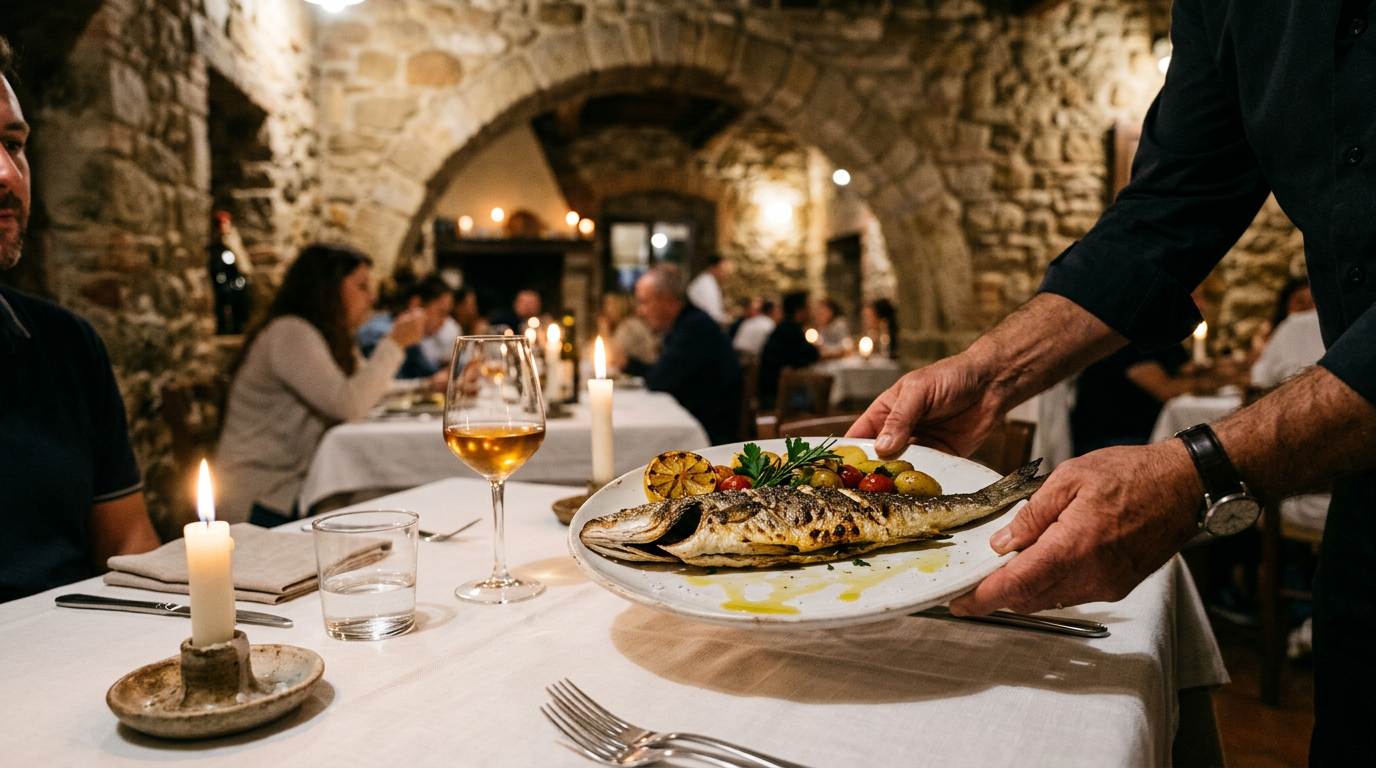
Cacciucco alla livornese is the symbolic dish of this tradition - the fish stew born in Livorno that reached Poggibonsi and took root there, becoming part of the identity of the restaurant. But there are also tagliolini with clams, fresh grilled fish with territory herbs, stuffed squid with seasonal vegetables.
The Alcide kitchen is not a fish kitchen that ignores the land tradition - it is a kitchen that brings both together, with the same care and the same quality of ingredients. It is the Tuscan borderland cooking, the kind that does not choose between the sea and the hill but wants both.
When to book and what to order
At Ristorante Alcide, reservation is advisable, especially for fish dishes that require advance preparation. Cacciucco in particular should be requested the day before - the fish is purchased in the morning, the cooking requires timing that cannot be improvised.
The best time for fish is autumn and winter - when the Tyrrhenian is at its peak for the main cacciucco species (scorpionfish, octopus, slipper lobster). In summer the fish is good but the selection may be more limited.
For those who do not want cacciucco, tagliolini with clams are a very high-quality alternative - Tyrrhenian clams have a flavour that Atlantic farmed clams cannot match.
Want to taste it for real?
At Ristorante Alcide you will find it on the table - made the right way, with fresh ingredients and the care of the Ancillotti family since 1849.