Ingredients
Tuscan Pecorino: fresh, aged and how to pair it
Pecorino Toscano DOP: fresh, semi-aged and aged. History, characteristics and how to pair it with wine and traditional Tuscan dishes.
Pecorino Toscano DOP: what sets it apart from the rest
Italy produces dozens of varieties of pecorino - from Sardo to Romano, from Sicilian to Calabrian. Pecorino Toscano DOP stands apart from all of them on one fundamental quality: its underlying sweetness. Where Pecorino Romano is salty and almost pungent (it is used mainly for grating), Pecorino Toscano has a milky sweetness even in its aged forms, with bitterness and sharpness playing second fiddle to the flavour of the well-crafted sheep’s milk.
This sweetness comes from several factors: the sheep breeds used (mainly Sarda and Massese, both with high-quality and well-balanced milk), the type of rennet (animal or vegetable), the Tuscan pastures with their aromatic herbs that are reflected in the flavour of the milk, and the production techniques that in the best farms have been handed down through generations.
The DOP specification establishes the production zone (all of Tuscany), the type of milk (only sheep’s milk, fresh, not sterilised), the production methods and the characteristics of the finished product.
Fresh, semi-aged and aged: the differences
Pecorino Toscano DOP comes in three main versions, with very different characteristics.
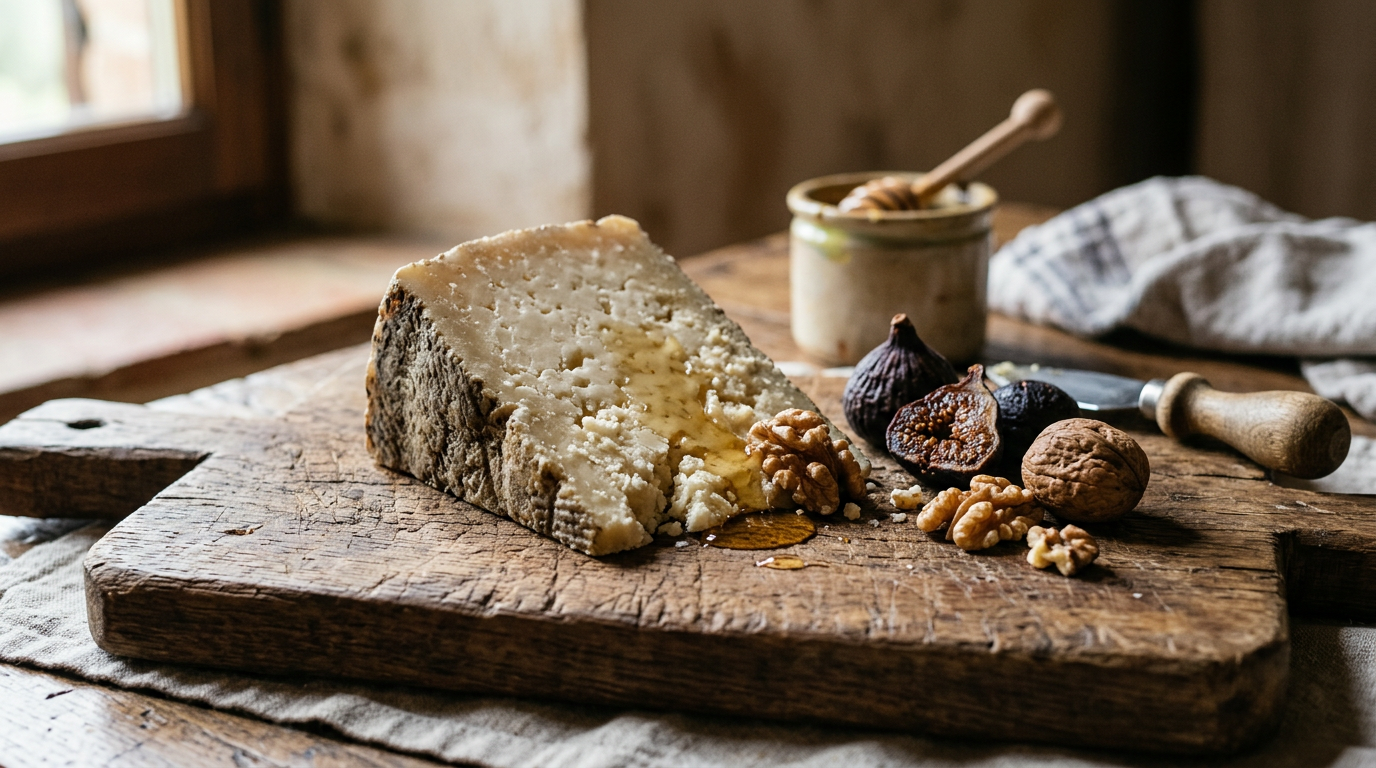
Fresh (up to 20 days’ ripening): soft white paste, virtually no rind. The flavour is delicate, milky, with an almost buttery sweetness. Eaten as a table cheese, with honey, with fig or onion jam. It does not lend itself to grating - it slices.
Semi-aged (20-45 days): more compact paste, thin yellow rind. The flavour intensifies - more savouriness, more cooked milk aroma, with a light herbal note. This is the most versatile format - it works both on the table and in the kitchen (melted on bruschetta, grated on pici or ribollita).
Aged (over 120 days): hard and granular paste, yellow-orange rind. The flavour is intense, with notes of burnt butter, dried herbs, a slight spiciness. This is the format for pairing with important red wines and for grating onto pasta.
There is also a long-matured version (over 18-24 months) that produces an almost Parmesan-like cheese in texture, with remarkable flavour intensity.
Sheep’s milk in Tuscany: breeds and pastures
The quality of Pecorino Toscano depends fundamentally on the quality of the milk - and this depends on sheep breeds and pastures.
The sheep that graze on the Sienese and Grosseto hills, on the Maremma plateaux and on the meadows of the Lucchesia produce milk with different chemical composition depending on the season, the pasture and the herbs. In spring, when the animals eat fresh grasses and flowers, the milk has delicate and floral aromas that are reflected in the cheese. In summer, with drier pastures, the milk is more concentrated and the cheese more flavourful.
The artisan dairies of Tuscany that work with local milk age their cheeses in a way that reflects this seasonal variation - a spring pecorino has different characteristics from an autumn one. It is the same logic as wine - every vintage has its own character.
How to pair pecorino with wine
Pecorino Toscano is one of the Italian cheeses with the widest range of wine pairings - it pairs with both whites and reds, with both young and aged wines.
Fresh pecorino: Vernaccia di San Gimignano is the perfect territorial pairing. The freshness of the wine mirrors the lightness of the cheese. A light Morellino or a Tuscan rosé also work well.
Semi-aged pecorino: Chianti Annata, Morellino di Scansano, Rosso di Montalcino. The medium structure of the cheese calls for a medium-bodied wine.
Aged pecorino: Chianti Classico Riserva, young Brunello, Vino Nobile. The intensity of the aged cheese demands a wine with structure and complexity.
With honey: the classic pairing for fresh pecorino is with chestnut honey (bitter, intense) or wildflower honey. The sweetness of the honey balances the savouriness of the cheese.
With fig jam: another Tuscan tradition - the sweetness of the jam with the milky flavour of the semi-aged pecorino is a simple and satisfying pairing.
Pecorino in the kitchen: more than a cheeseboard
Pecorino Toscano is not just a cheeseboard cheese - it is an important ingredient in Tuscan cooking.
Grated onto pasta: pici with aged grated pecorino and black pepper (the Tuscan version of cacio e pepe) is an extremely simple and delicious first course.
On ribollita: a spoonful of grated semi-aged pecorino on top of hot ribollita is a traditional touch that adds savouriness and creaminess.
In medieval recipes: the Tuscan migliaccio (sweet-savoury tart with buckwheat flour and pecorino), tortelli di patate with pecorino and chicken livers, bruschetta with pecorino and honey - these are all preparations where the cheese is a structural ingredient.
Melted: semi-aged pecorino melts well in the oven on bruschetta or gratins - its sweetness and medium structure produce a uniform melt without the excess fat of mozzarella.
Where to buy authentic Pecorino Toscano
Pecorino Toscano DOP can be found practically all over Italy in the best cheese shops. But to get the product at its best, the advice is to buy it directly from dairies in the area - especially in the Pienza area (Val d’Orcia), considered the capital of Tuscan pecorino, and in the Grosseto and Siena areas.
Many Tuscan agriturismi and farms sell their pecorino directly - this is the way to get the freshest cheese with the most transparent provenance.
The weekly markets of Tuscan villages always have a few local cheese stalls - this is where you find the pecorino that the producer’s grandmother aged in the tuff cave, as it has always been done.
Want to taste it for real?
At Ristorante Alcide you will find it on the table - made the right way, with fresh ingredients and the care of the Ancillotti family since 1849.