Cucina Povera
Tuscan ribollita: the authentic recipe for the most famous soup
The real recipe for Tuscan ribollita. Cavolo nero, cannellini beans and the secret of the day after. The most famous poor soup in Italy.
Why it is called ribollita
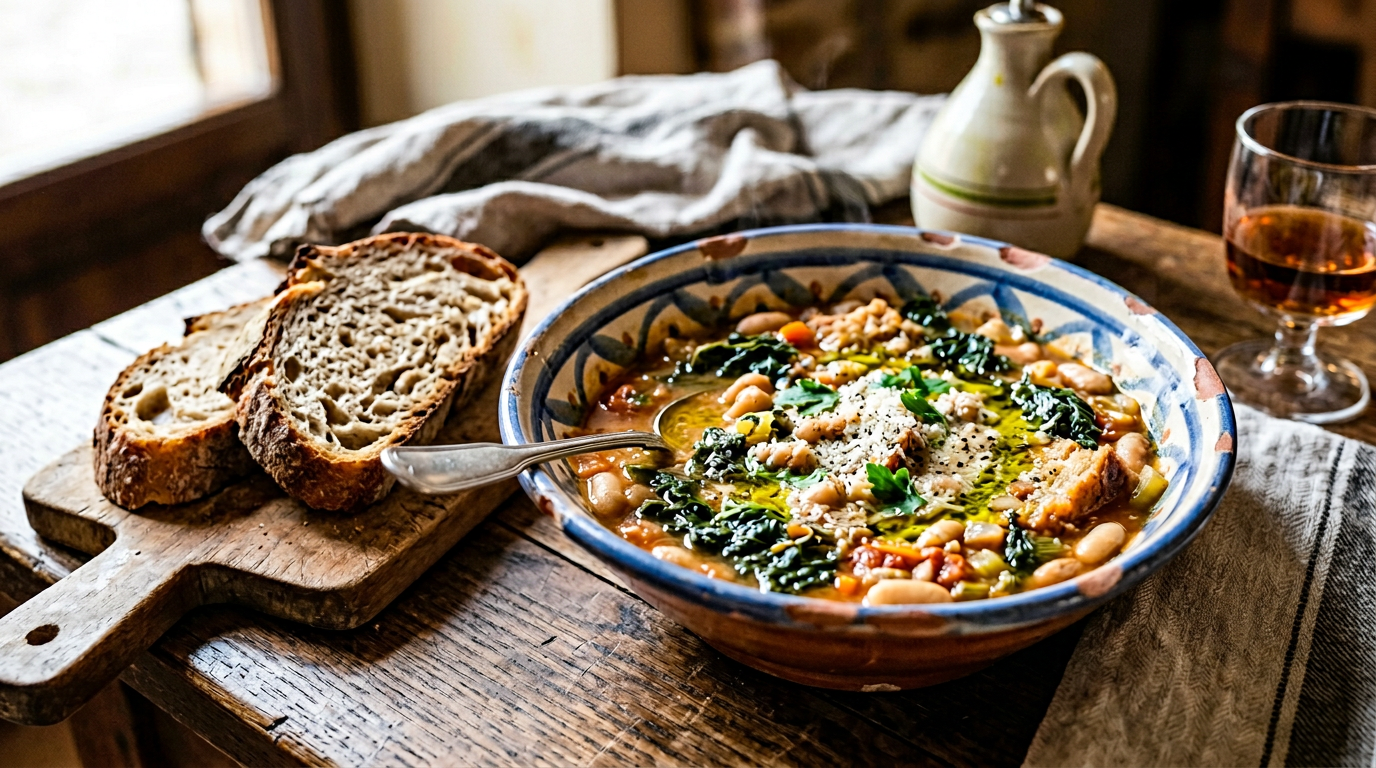
The name already tells its story. Ribollita simply means “reheated” - or more precisely “brought back to the boil”. It is not the just-made cavolo nero and bean soup, though that is already good. It is the soup of the day after, when the leftover soup is put back on the heat and left to simmer again, longer, until it becomes something different.
The phenomenon is familiar to anyone who has ever left a minestra in the fridge overnight: the flavours meld together, the broth loses a little excess water, the ingredients integrate. Ribollita takes this process to its extreme. You do not want a soup with liquid broth and separate ingredients - you want something almost solid, where the bread has absorbed almost all the broth and the vegetables have practically dissolved into the preparation.
Tradition has it that ribollita was made in Tuscany back in the Middle Ages - peasant families would cook large pots of vegetable and legume soup on Fridays, and reheat it throughout the weekend. Each time it was brought back to heat, something was added - more bread, more vegetables, more beans. It was a soup in continuous construction, changing every day and becoming thicker and more flavourful with each passing hour.
The ingredients that cannot be replaced
Ribollita has a number of fixed ingredients - those that cannot be removed without transforming the dish into something else.
Cavolo nero: indispensable. There is no ribollita without cavolo nero. Savoy cabbage will not do, white cabbage will not do, chard even less so. Tuscan cavolo nero - its dark, crinkled, almost black leaves, with their bitter and earthy flavour - is the ingredient that characterises the dish most immediately.
Cannellini beans: the protein base and structure of the soup. Cooked until they almost dissolve, they help thicken the broth naturally. Some use borlotti beans too, but the most common tradition is with cannellini.
Unsalted Tuscan bread: stale, added in generous quantities. It is not added at the end as a garnish - it enters the soup during cooking and becomes an integral part of the dish.
Onion, carrot, celery: the base soffritto that never changes.
Tuscan extra-virgin olive oil: in generous quantities, both in the soffritto and raw over the finished ribollita.
Tuscan cavolo nero: where to find it and when it is in season
Cavolo nero (Brassica oleracea var. palmifolia) is one of the most iconic vegetables in Tuscan cooking - its long, strap-shaped leaves of an almost black green colour are recognisable at a glance in any Tuscan market.
Seasonality is fundamental: cavolo nero is a winter vegetable, and reaches its flavour peak after the first frosts of November-December. The cold transforms some of the starches into sugars, slightly sweetening the natural bitterness of the leaves and making them softer and more flavourful. Cavolo nero harvested in summer or early autumn has a more aggressive flavour and a tougher texture.
In Tuscany it is found in weekly markets practically throughout the winter - from October to February. Outside Tuscany it is harder to find: in modern supermarkets it is increasingly available (also under the English name of “lacinato kale” or “dinosaur kale”), but the quality of industrially grown cavolo nero is often inferior to that of small-garden plants.
The recipe step by step
For four people: 200 grams of dried cannellini beans (soaked the evening before), a bunch of cavolo nero (approximately 500 grams of leaves), half a small savoy cabbage, one or two potatoes, a carrot, a medium onion, a stick of celery, tinned peeled tomatoes (or a tablespoon of concentrate in winter), 3 slices of stale Tuscan bread, abundant extra-virgin olive oil, salt, black pepper, rosemary.
The day before: cook the beans in abundant unsalted water with a sprig of rosemary and some garlic cloves. At the end of cooking add salt and keep the beans in their broth. Blend half the beans and leave them in the broth - this step creates the dense base of the ribollita.
The day of preparation: sauté chopped onion, carrot and celery in extra-virgin olive oil in a large casserole. When the soffritto is golden add the tinned peeled tomatoes and cook for ten minutes. Add the cavolo nero leaves roughly chopped, the savoy cabbage in strips, the potatoes in cubes. Cover with the bean cooking broth. Cook over medium heat for one hour.
Add the whole beans, the bread in pieces, adjust salt and pepper. Cook for a further thirty minutes. Leave to rest then reboll the day after.
The day after: why ribollita is better reheated
The ribollita of the day after is not only a tradition - it is a chemical necessity. During the night in the fridge, the bread continues to absorb the remaining liquid, the starches of the beans bind together and with the carbohydrates of the bread, the cavolo nero releases further aromatic compounds that integrate into the broth, now almost as thick as porridge.
When put back on the heat the morning after, the ribollita already has a very different consistency from the previous day. Add very little water if necessary, leave to simmer over low heat for half an hour, stirring from time to time to prevent sticking. Serve very hot, with a generous drizzle of raw new extra-virgin olive oil on top - that green and fruity oil is the final seasoning, the one that takes the dish to another level.
Does summer ribollita exist? The honest answer
No. Or rather - it exists as a summer variant with seasonal vegetables, but it is not the same thing. Ribollita is a winter dish in its essence - it depends on cavolo nero, which is only good in winter, and has a density and warmth that makes no sense in the summer heat.
Some restaurants offer “summer ribollita” with courgettes, fresh beans, tomatoes - it is a minestrone with bread, not a ribollita. The name may remain, but the philosophy is different.
If you want to eat the real ribollita, come to Tuscany between November and March. Better still, come after a night of frost, when the cavolo nero is at its best and the evening has that cold that makes a hot soup one of the most satisfying things in the world.
At Ristorante Alcide ribollita is on the menu in the winter months, when the ingredients are the right ones and the season calls for it.
Want to taste it for real?
At Ristorante Alcide you will find it on the table - made the right way, with fresh ingredients and the care of the Ancillotti family since 1849.