Territory
What to eat in Siena: the dishes of the Sienese tradition
The typical dishes of Siena: pici, panzanella, panforte, ricciarelli and Chianina beef. A guide to Sienese cuisine for visitors to the city of the Palio.
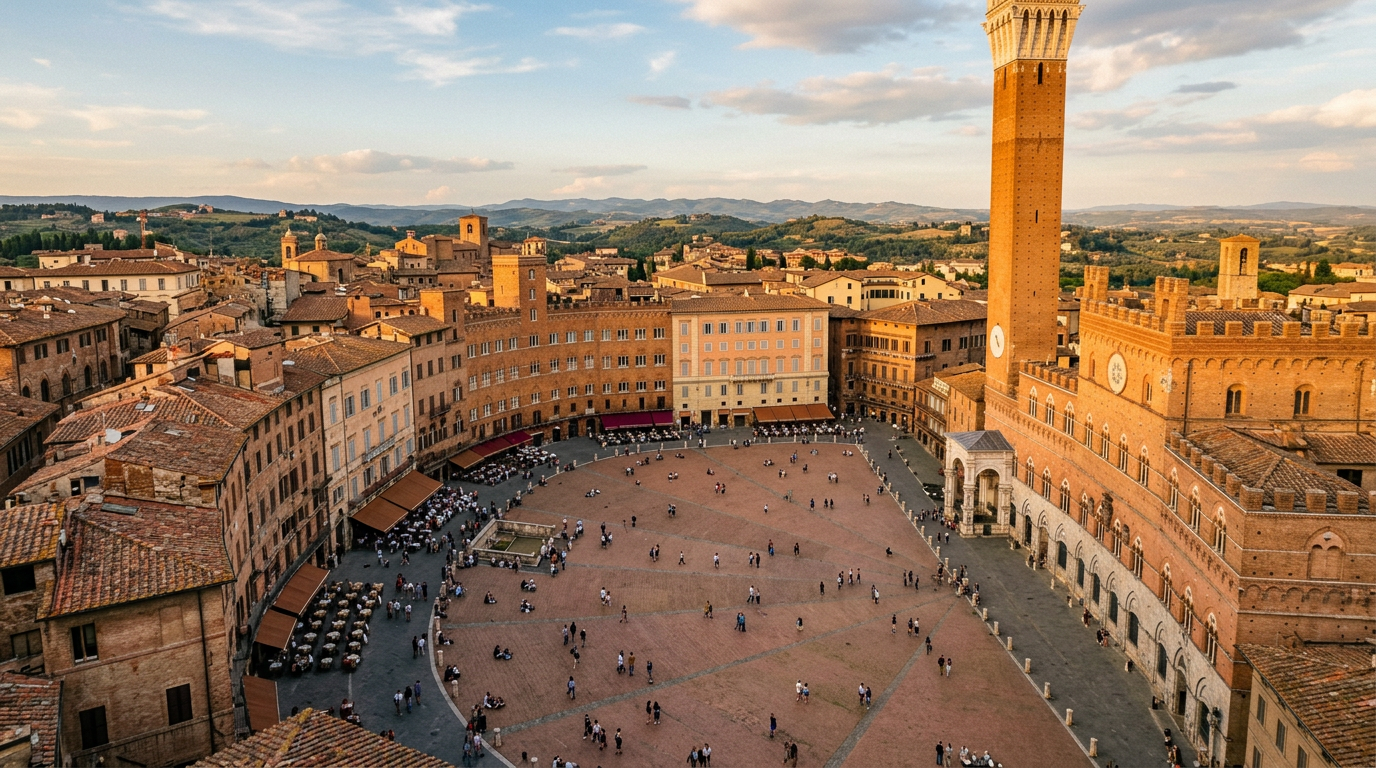
Sienese cuisine: sober, intense, territorial
Siena has its own cuisine, distinct from that of Florence and from the other Tuscan provinces. Those expecting an abundant cuisine or showy flavours will be surprised - the Sienese tradition is sober, essential, built on few ingredients of the highest quality. It is the cooking of a medieval city that has always prioritised quality over quantity, intensity over complexity.
Sienese cuisine is born from a precise territory: the clay soils around the city, the Val d’Orcia with its pastures and olive groves, the Monte Amiata forests rich in mushrooms and truffles, the vineyards of Chianti and Montalcino. Every ingredient on the Sienese menu comes from this territory - Pecorino from Pienza, Chianina from the Val di Chiana, truffle from the clay hills, wine from Montalcino.
The cuisine of Siena is also the cuisine of the Palio - of that medieval festival that divides the city into seventeen contrade and that brings to the table, on the days of the race, the dishes of the oldest tradition: pici, roast pigeon, the ribollite of the contrade, the festival sweets.
Pici: Siena’s symbolic pasta
Pici are the most emblematic pasta of Sienese cooking. Made by hand with flour and water, without eggs - they are the pasta of peasant simplicity, made with what was available. In every alley of Siena there is a trattoria that makes them every morning.
The traditional sauces in the area are aglione (with fresh tomato in summer), wild boar ragù (in autumn), and toasted breadcrumbs (the poorest and oldest sauce). In the historic tratttorie of the centro storico you can still find pici made by hand that morning - you feel it at the bite, rougher and more chewy than the shop-bought kind.
The Sienese version of pici tends to be slightly different from that of the Val d’Orcia - thinner, less rustic, with a texture closer to thick spaghetti. This is not a quality judgement - it is the geographical variation that makes Tuscan pasta a territorial phenomenon rather than a standardised recipe.
Panforte and ricciarelli: the sweets of the Middle Ages
Sienese sweets are among the oldest in Italy - some have documented recipes from the thirteenth century, others from the fourteenth. Panforte and ricciarelli are the most well-known worldwide, but they are only two of dozens of traditional Sienese sweets.
Panforte: spiced bread with honey, almonds, walnuts, dried figs, exotic spices (cinnamon, coriander, pepper, nutmeg, cloves) and rice paper. The original recipe comes from the sweets of the crusaders - exotic spices were brought to Italy along Middle Eastern trade routes, and Siena was one of the distribution cities. It exists in two versions: white panforte (with icing sugar) and black panforte (with cocoa).
Ricciarelli: almond paste biscuits - marzipan with sugar, egg whites and ground almonds - oval in shape, with a crispy surface and a soft interior. The origin is Arabic (almond sweets spread to Italy through medieval Sicily), but Siena has made them so completely its own that today they are identified exclusively with the city.
Cavallucci: spiced biscuits with anise, walnuts and orange zest - the sweet of the Sienese peasants, less refined than panforte but with an equally long history.
Chianina from Siena: bistecca and more
The bistecca fiorentina is famous for the breed (the Chianina), but the Chianina is at home in the province of Siena too - the Val di Chiana extends between Arezzo and Chiusi, passing through Sienese territory. The Sienese butchers who work with certified Chianina produce meat of the highest level.
The Sienese bistecca differs slightly from the Florentine one in the ritual of presentation - in Siena it tends to be served with more freedom regarding the coarse salt and extra virgin olive oil, and the side dish of cannellini beans with sage is almost obligatory. The meat is the same - dry-aged Chianina, T-bone cut, rare over charcoal.
But Chianina is not only bistecca. The Sienese mixed bollito, with Chianina veal and territory aromatics, is an elegant winter dish. Chianina stew with porcini mushrooms is one of the most requested meat second courses in autumn.
What to drink in Siena: from Chianti to Vino Nobile
The wine endowment of the province of Siena is exceptional - no other Italian province has a similar concentration of great denominations in its territory.
Brunello di Montalcino: Tuscany’s greatest wine, produced in the Montalcino area south of Siena.
Vino Nobile di Montepulciano: less famous than Brunello but of the highest quality, produced on the hills around Montepulciano.
Chianti Classico: the southern zone of the Chianti Classico is in the province of Siena - Castelnuovo Berardenga and part of Gaiole are the Sienese municipalities of the denomination.
Morellino di Scansano: technically in the province of Grosseto, but a few kilometres from the Sienese border - the coastal wine that Sienese restaurants often use as an alternative to Chianti.
From Siena to Poggibonsi: 25 km for cacciucco
Poggibonsi is 25 km from Siena - twenty-five minutes of road through hills of vineyards and olive groves. Ristorante Alcide in Poggibonsi offers something that the Sienese land tradition does not have to the same degree: fresh Tyrrhenian fish.
Those who come from Siena for dinner at Ristorante Alcide find a kitchen that knows the Sienese tradition in its land elements - pici, Chianina, Pecorino - but that adds the maritime dimension which Siena, almost eighty kilometres from the sea, cannot offer with the same ease.
Alcide’s cacciucco alla livornese, with the fish that arrived from Livorno that morning, is 25 km from Siena. Worth the trip.
Want to taste it for real?
At Ristorante Alcide you will find it on the table - made the right way, with fresh ingredients and the care of the Ancillotti family since 1849.