Territory
What to eat in Tuscany: a complete food guide
The complete guide to Tuscan food: from pici pasta to bistecca fiorentina, ribollita to cacciucco. What to eat, where to find it and what to drink with it.
Why Tuscan food is different from the rest of Italy
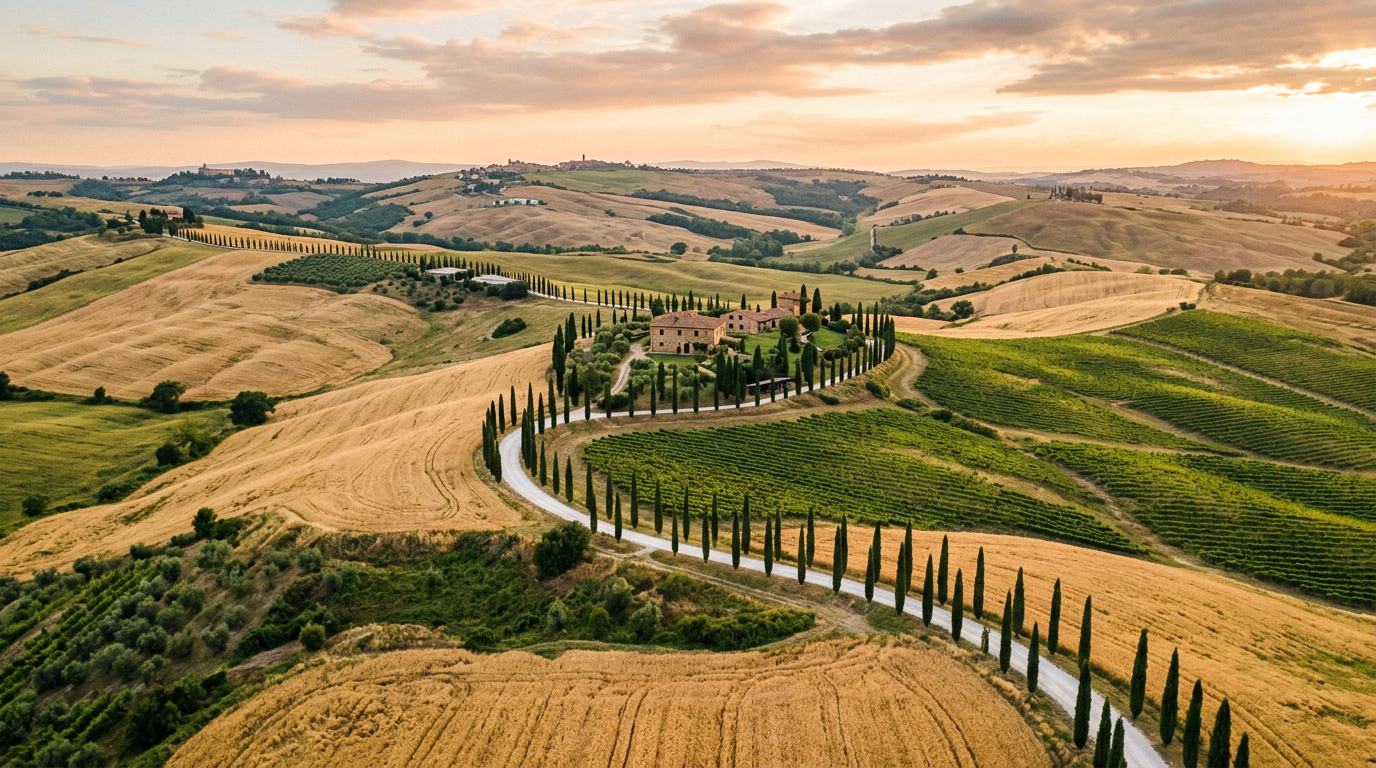
Ask anyone to name an Italian cuisine, and most people will describe something that is essentially Tuscan - simple ingredients treated with great care, strong flavours with minimal decoration, a deep connection between what grows in the fields and what ends up on the table. Tuscany is not the only Italian regional cuisine worth knowing, but it is the one that has most shaped the world’s image of Italian food.
This reputation is earned. Tuscan cooking has a coherence and a philosophical consistency that many other regional traditions lack - a commitment to letting good ingredients speak for themselves, a suspicion of unnecessary complexity, and a remarkable ability to make dishes that are technically simple but memorably good.
The foundation of Tuscan cuisine is the olive oil - produced throughout the region, with some of the best extra virgin oil in Italy coming from the hills around Lucca, the Chianti, and the area around Siena. Almost everything in Tuscan cooking starts with olive oil and builds from there.
The second foundation is the bread - pane sciocco, the unsalted Tuscan loaf with a thick crust and a dense crumb. Made without salt since the Middle Ages (a response to the salt tax levied by the Papal State on Tuscany), it has a distinctive flavour that pairs perfectly with the salty, flavourful toppings and soups of the local cuisine.
The pasta: pici, pappardelle and fresh egg pasta
Tuscany is primarily a fresh pasta region - egg pasta made by hand, rolled on the wooden board, cut by hand or with a knife. The most iconic Tuscan pasta is the pici: a thick, hand-rolled spaghetti made with flour and water (no eggs), worked between the palms until it reaches the characteristic irregular cylindrical shape.
Pici are the pasta of the Sienese tradition - found throughout the province of Siena and in the Val d’Elsa. The classic sauces are aglione (the large, sweet Tuscan garlic from Val di Chiana, cooked slowly with fresh tomato), wild boar ragù, and le briciole - breadcrumbs toasted in olive oil with garlic, one of the oldest and simplest pasta condiments in Italian cooking.
Pappardelle - wide, flat egg pasta ribbons - are the pasta of the autumn, paired almost exclusively with game: wild boar, hare, or duck ragù, cooked for hours until the meat melts into the sauce and the pasta absorbs all the deep flavours of the forest.
The city of Florence has its own pasta tradition: tagliatelle with meat ragù, lasagne al forno, and the fresh pasta sheets used for winter soups.
The meat: bistecca fiorentina and Chianina beef
The bistecca fiorentina is one of the most famous meat dishes in the world - a T-bone steak cut from Chianina beef, aged for at least twenty days, grilled over a wood fire to rare (and only rare: ordering it well done is considered a cultural transgression), seasoned with nothing but coarse salt and a drizzle of olive oil.
The Chianina is the breed that makes the bistecca fiorentina what it is - a large, white bovine from the Val di Chiana, one of the oldest and largest cattle breeds in the world, raised for centuries in the valleys of Tuscany and Umbria. The meat is pale pink, with little marbling but remarkable tenderness after proper ageing. The flavour is clean, mineral, and direct.
The Cinta Senese is the other great Tuscan meat - a heritage breed pig, black with a white band around its chest, raised in the hills of Siena in semi-wild conditions. The Cinta Senese produces extraordinary salumi - finocchiona, capocollo, lardo - and a pork meat of exceptional flavour.
The soups: ribollita, acquacotta and minestrone di farro
Tuscan soup culture is one of the richest in Italy. The soups of Tuscany are not light first courses - they are substantial, filling dishes that were the primary meal of the rural population for centuries.
Ribollita is the most famous - a thick soup of cannellini beans, cavolo nero (black kale), savoy cabbage, and stale unsalted bread, cooked slowly until it becomes almost a porridge. The name means “re-boiled”: it was traditionally made in large quantities and reheated (and improved) over the following days.
Acquacotta (“cooked water”) is the soup of the Maremma - onion, tomato, celery, stale bread, and a poached egg. One of the simplest soups in Italian cooking, and one of the most revealing about the cucina povera philosophy: make something worth eating out of almost nothing.
Minestrone di farro: farro (emmer wheat) grown in Garfagnana is one of the great ingredients of northern Tuscany - nutty, chewy, with a satisfying heartiness. The farro minestrone, with cannellini beans and vegetables, is the soup of the Lucchese mountains.
The fish: cacciucco and the inland seafood tradition
This is where Tuscany surprises many visitors: despite being largely inland, the region has a genuine and serious seafood tradition, born from the proximity of the Tyrrhenian coast and maintained through direct relationships between coastal fishermen and inland restaurants.
Cacciucco is the flagship - the dense Livornese fish stew made with at least five varieties of Tyrrhenian fish, slow-cooked in a base of soffritto, tomato and wine, served over toasted bread. It was born as a dish for fishermen using unsellable fish; today it is the most celebrated dish on the Tuscan coast.
In the inland towns of the Val d’Elsa and the Sienese hills, restaurants with direct connections to the Livorno fish market offer fresh cacciucco and other seafood dishes - spaghetti alle vongole, branzino all’acqua pazza, mixed grilled fish. Ristorante Alcide in Poggibonsi is one of the most established examples of this tradition: for over 170 years, the kitchen has maintained direct relationships with Livorno suppliers and built a reputation around the quality of its fish.
The wine: Chianti, Vernaccia and Brunello
Tuscany produces some of Italy’s - and the world’s - most respected wines. The three most important denominations for visitors to know are:
Chianti Classico DOCG: the heartland of Tuscan red wine, produced between Florence and Siena in the zone delimited by the Gallo Nero consortium. Sangiovese-based, with flavours of cherry, dried herbs and a characteristic mineral edge. The best examples are age-worthy and complex.
Vernaccia di San Gimignano DOCG: the only white wine DOCG of Tuscany, produced around the medieval tower-town of San Gimignano. Dry, crisp, with a characteristic slight bitterness on the finish that makes it an ideal pairing for fish and lighter dishes.
Brunello di Montalcino DOCG: the most prestigious Tuscan red, produced from 100% Sangiovese Grosso (locally called Brunello) around the hill town of Montalcino. Released after minimum five years of ageing, with the potential to improve for decades. One of the great red wines of Italy.
Where to eat well in Tuscany without tourist traps
The main risk in eating well in Tuscany is the tourist trap - the restaurant with a laminated multi-language menu, synthetic pasta and indifferent wine, positioned near a famous monument and relying on foot traffic rather than quality.
The reliable indicators of a genuine Tuscan restaurant are: a short, seasonal menu handwritten on a blackboard; a wine list focused on local denominations; a room filled with Italian customers at lunch; a pasta made that morning; and a kitchen that will tell you with some pride where the meat and the fish come from.
The restaurants that have survived for many years - decades, or in the case of places like Ristorante Alcide in Poggibonsi, well over a century - tend to be the most reliable. Continuity in Tuscan restaurant culture usually means quality: a kitchen that has been cooking the same dishes for generations has had time to refine them.
Want to taste it for real?
At Ristorante Alcide you will find it on the table - made the right way, with fresh ingredients and the care of the Ancillotti family since 1849.