Cacciucco
Cacciucco fish varieties: how many do you really need?
They say cacciucco must contain as many varieties of fish as there are Cs in the word. Is it really true? The answer from Tuscan fishermen.
The seven-C rule: origins of a saying
Every person from Livorno knows the rule. Cacciucco is spelled with five Cs, and each C must correspond to a variety of fish. Some say seven, some five, some declare that the real number is whatever you found at the market that morning. The rule exists, but it is more poetic than technical, more mnemonic than prescriptive.
The origin of the saying is as uncertain as it is fascinating. One version tells of an old fisherman who taught the young to remember the complexity of the dish by linking it to the letters of the word. Another, more pragmatic version claims that the rule arose from the need to give economic value to lower-grade fish - by putting many of them together, the price of the dish was justified. Both explanations have something true in them.
What is certain is that the C-rule reflects a solid culinary principle: cacciucco made with a single fish is not cacciucco. The complexity of the broth, the contrast between textures, the layering of distinct flavours - all of this comes from variety. A cacciucco made with only large prawns is a different dish, probably also good, but it is not cacciucco.
Today the C-rule is quoted on menus throughout coastal Tuscany, often with regional pride. Sometimes it has become a little overused - you find it on tourist brochures, on signs outside port tratttorie, in food guides. But behind the formula there is real content worth exploring.
The essential fish: the list that never changes
Among all the varieties that can go into a cacciucco, some are fundamental - their absence changes the very nature of the dish.
Scorpionfish is the first and most important. This bottom-dwelling fish, ugly and spiny, is the engine of the broth. Its gelatinous flesh and enormous head release during cooking a structure and depth of flavour that no other fish can provide. It exists in two main varieties in the Tyrrhenian seabed: red scorpionfish (Scorpaena scrofa) and black scorpionfish (Scorpaena porcus). The red is larger and more flavourful; the black is more common and less expensive. Both work, but the red is preferable when available.
Octopus is the second pillar. It cooks slowly, softens in the tomato broth, releases an unmistakable flavour and a meaty texture that balances the delicacy of the more tender fish. A cacciucco without octopus is incomplete.
Cuttlefish complete the basic triad. They cook faster than octopus, release their ink which colours the broth a dark brick-red, and their sweetness balances the intensity of the scorpionfish.
These three varieties - scorpionfish, octopus, cuttlefish - are the irreducible heart. The rest can vary.
The optional fish: regional variations
Beyond the basic triad, cacciucco is enriched with fish that change depending on the port, the season, and family tradition. These variations are proof of the vitality of the dish - it is not a fossilised recipe, but a living system.
Slipper lobster (cicale di mare or pannocchie): the symbol of Livornese cacciucco in its presentation, added in the last minutes and served whole on the surface of the dish. Their flesh is delicate and sweet, almost like a prawn with more character. They are the most visually beautiful part of the cacciucco.
Moray eel: a rock fish with a strong character, used mainly to enrich the broth. Its flesh is fibrous and flavourful; some Livornese families cannot imagine cacciucco without it.
Conger eel and lesser-spotted dogfish: bottom-dwelling fish with compact flesh, often added for texture. Conger eel in particular holds up well during long cooking without falling apart.
Red mullet: delicate and fragrant, they enter in the final phase. Rock red mullet (more prized than mud red mullet) have a floral flavour that contrasts beautifully with the rusticity of the broth.
Sea robin and weever fish: medium-robust fish, ideal for the second phase of cooking. Weever fish have venomous spines - fishermen handle them with gloves - but their flesh is firm and flavourful.
Fresh vs frozen fish: does it really matter?
The short answer is: yes, it matters enormously, but not in the way you might think. Frozen fish is not unusable - there are rapid-freezing technologies that preserve the flesh well. The problem is the gelatin.
Fish such as scorpionfish, conger eel, and slipper lobster release during cooking a quantity of collagen and gelatin that gives the cacciucco broth that dense, enveloping consistency that distinguishes it from any diluted fish soup. The freezing process breaks cell walls and compromises this release - the broth of a cacciucco made with frozen fish tends to be more watery, less structured.
For octopus the question is different: freezing octopus is almost always beneficial because it softens the muscle fibres and reduces cooking time. The Livornese grandmother used to beat fresh octopus on the rocks - the modern freezer does the same work more conveniently.
The ideal choice is fresh fish for the scorpionfish and the more delicate fish, previously frozen octopus to soften the flesh, and strictly fresh slipper lobster for the final presentation.
Cacciucco inland: how the fish reaches Poggibonsi
Poggibonsi is at the heart of the Val d’Elsa, forty kilometres as the crow flies from the port of Livorno. It is not on the coast, it has no fish market. Yet cacciucco has been for decades one of the most requested dishes at Ristorante Alcide.
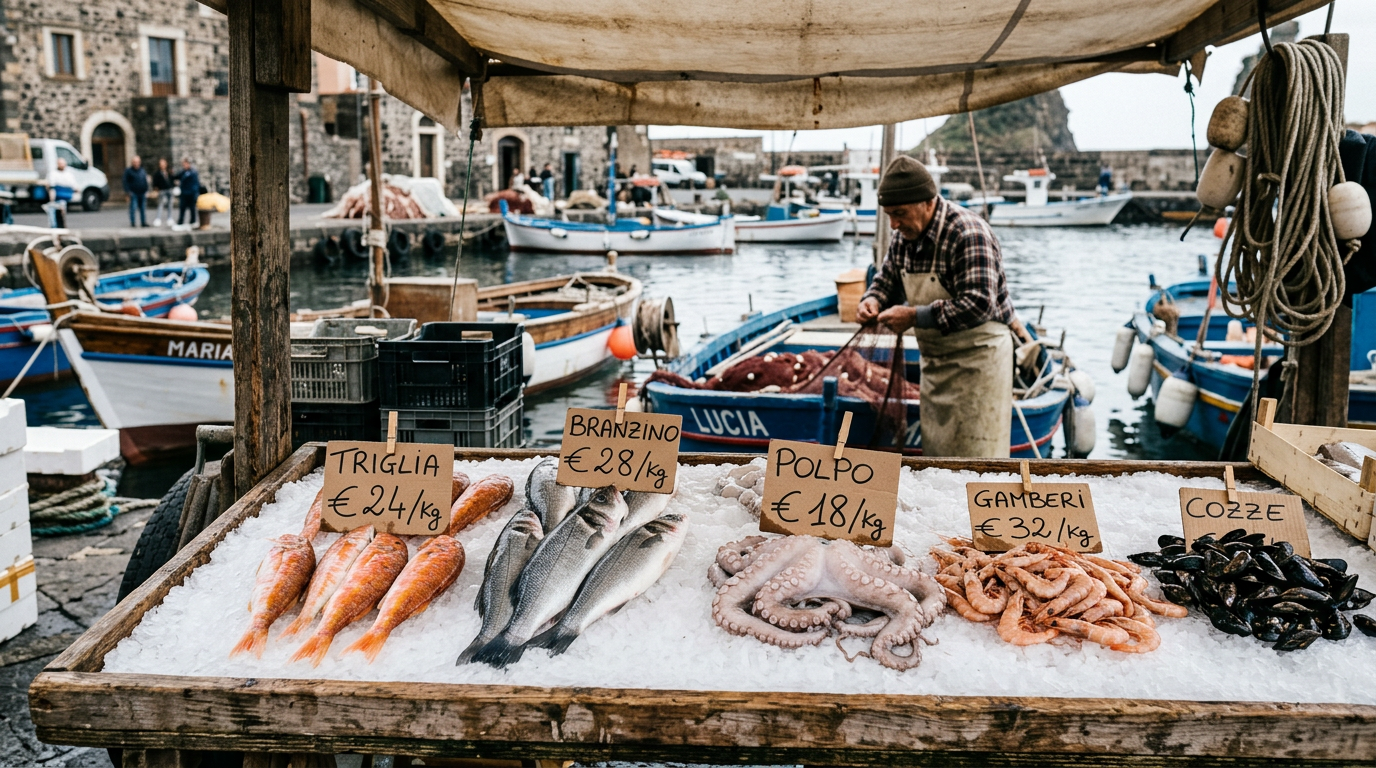
How does it work? The answer lies in fresh logistics. The major Tyrrhenian fish markets - Livorno and Viareggio above all - operate in the very early hours of the morning. Fish bought at four or five in the morning reaches the inland by service time at midday. If the cold chain is managed correctly and the relationship with suppliers is direct and continuous - as in the case of Alcide, where these relationships are measured in decades - the distance from the sea is not an obstacle.
The truth is that many seaside restaurants in Tuscany work with less fresh fish than what arrives at well-supplied inland restaurants. Proximity to the sea only guarantees freshness if you go directly to the fisherman - otherwise the fish makes the same journey as that destined for the interior, but with less attention to the route.
Want to taste it for real?
At Ristorante Alcide you will find it on the table - made the right way, with fresh ingredients and the care of the Ancillotti family since 1849.